Holiday Scams 2025: Your Complete Protection Guide

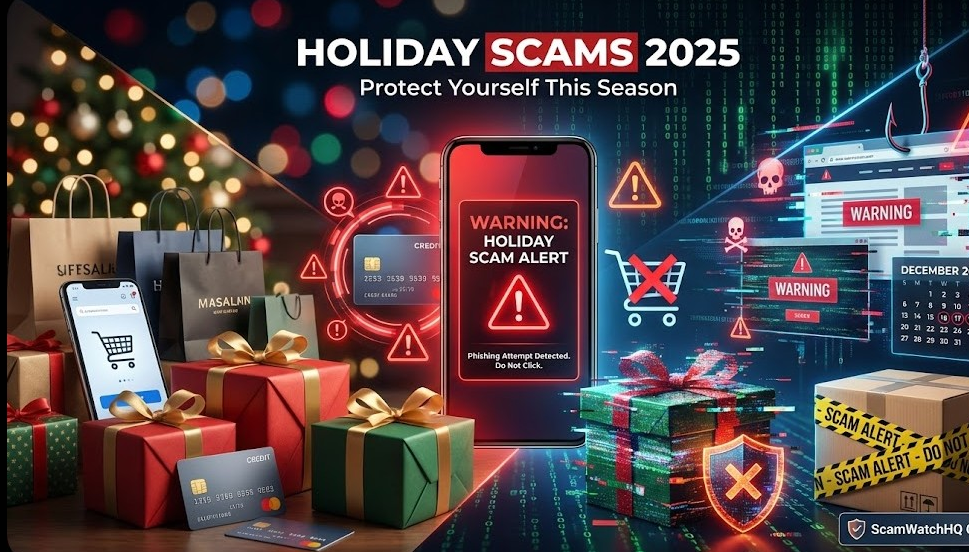
With less than two weeks until Christmas, scammers are working overtime to exploit rushed holiday shoppers. This year's scams are more sophisticated than ever, powered by AI technology that makes fake websites and phishing emails frighteningly believable. Here's everything you need to know to protect yourself this season.
 ScamWatchHQ
The State of Holiday Fraud in 2025
The numbers are staggering: Americans lost over $101 billion to returns fraud and abuse in 2023, with package delivery scams accounting for $470 million in text-based scams alone. This holiday season brings unprecedented risks:
- 89% of Americans report being targeted by or experiencing some type of scam
- Fake postal service websites surged 86% in the past month
- USPS impersonation sites increased 850% month-over-month
- Half of consumers (51%) encounter scams on social media every week
- Credit card fraud cost consumers $199 million in 2024
Generative AI has made scams look more legitimate than ever, with criminals using the technology to create realistic phishing emails, clone legitimate websites, and even produce deepfake video ads featuring celebrities.
 ScamWatchHQ
1. Online Shopping & Fake Website Scams
The Threat
Scammers create fraudulent shopping sites that look nearly identical to well-known retailers, often advertising unusually low prices or limited-time holiday discounts. Social media platforms like Facebook, Instagram, and TikTok have become prime hunting grounds, with fake ads sitting right alongside legitimate ones.
Current Statistics:
- 39% of consumers reported fraud after buying through social media ads (up from 35% in 2024)
- 46% of adults bought something advertised on social media in the last year
- Only 50% correctly identified that social media ads are often untrustworthy
Common Tactics
Deepfake Celebrity Endorsements: AI cloning tools create realistic video ads with celebrities' voices and faces promoting fake discounts on TikTok or Instagram.
Too-Good-to-Be-True Deals: Luxury goods, designer clothing, and electronics at incredibly low prices are almost always cheap counterfeits or complete scams.
Hot Toy Scams: High-demand items like the Easy Bake Ultimate Electric Oven, Ms. Rachel Emotions Learning Doll, and Klutz Lego Gravity Drop Activity Kit are being sold on fake sites that take your money and deliver nothing.
Advent Calendar Scams: Customers report receiving knock-off items, empty calendar doors, or nothing at all. When they try to contact the seller, the website disappears along with their money.
 ScamWatchHQ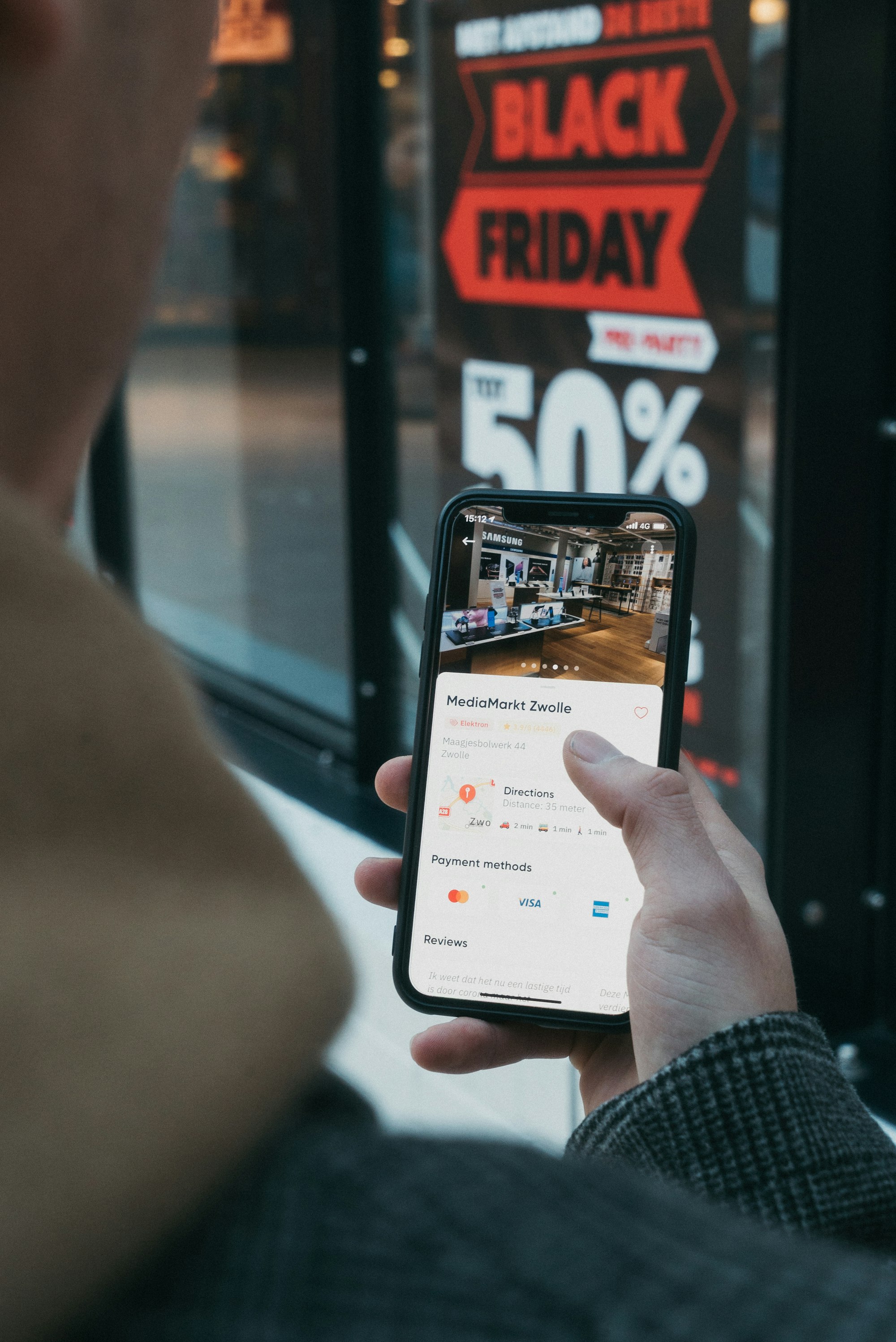
How to Protect Yourself
✅ Research Before Buying
- Search for the seller's name + "review," "complaint," or "scam"
- Check the BBB ScamTracker for reported issues
- Look for HTTPS in the URL (the padlock symbol)
- Type the retailer's name directly into your browser instead of clicking ads
✅ Warning Signs of Fake Sites
- Prices drastically lower than competitors
- Poor grammar or spelling errors
- URLs with slight misspellings (e.g., "Amaz0n.com" instead of "Amazon.com")
- No physical address or contact information
- Pressure to buy immediately ("Only 2 left in stock!")
- Payment only accepted via gift cards, wire transfer, cryptocurrency, or payment apps
✅ Safe Payment Methods
- Use credit cards instead of debit cards (better fraud protection)
- Never pay with gift cards, wire transfers, or cryptocurrency
- Keep all receipts and order confirmations
- Set up account alerts to track transactions
 ScamWatchHQ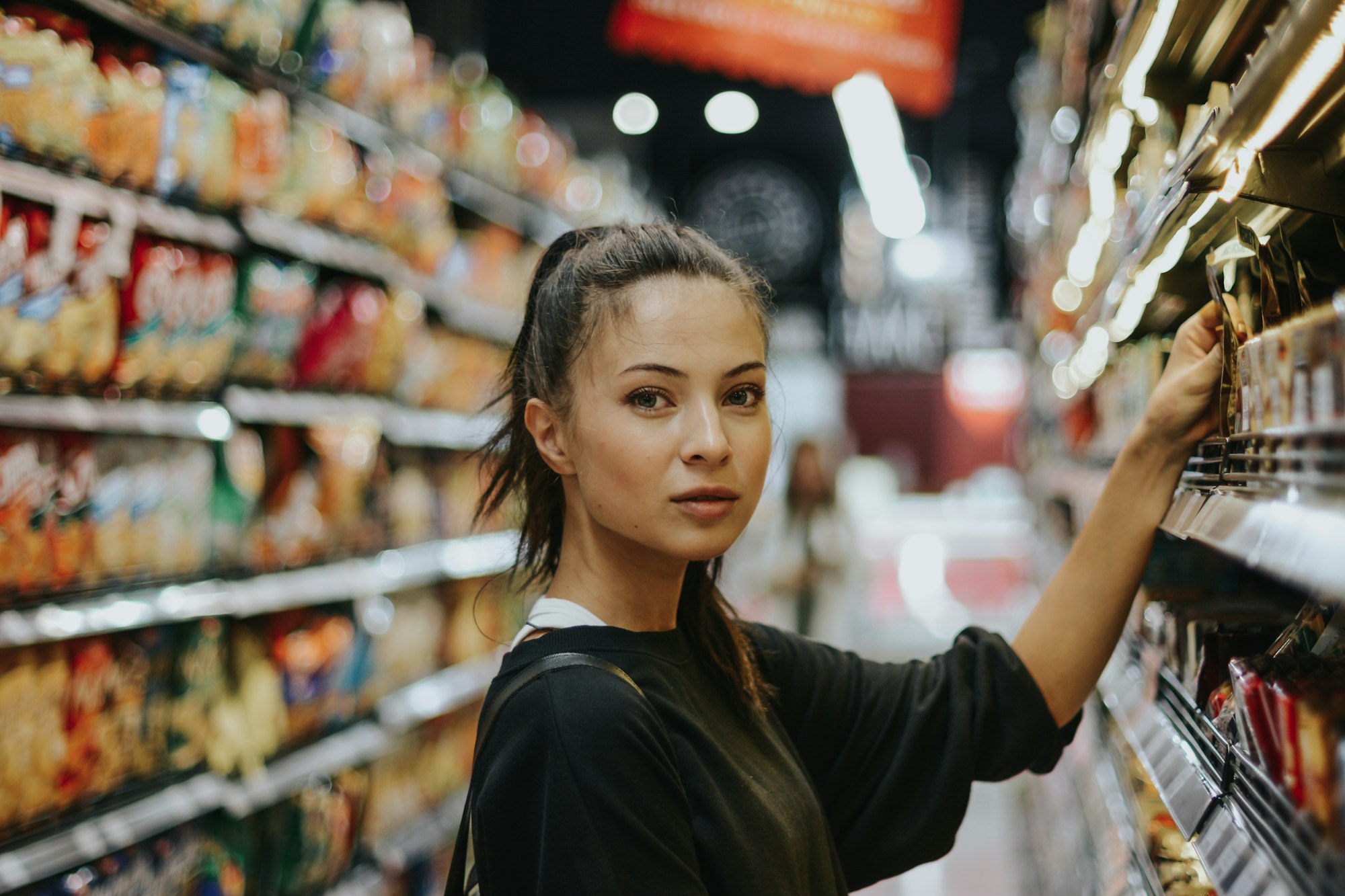
2. Package Delivery & Shipping Scams
The Threat
With over 2.3 billion deliveries projected this holiday season (up 5% from last year), delivery scams have become one of the most prevalent threats. Criminals exploit the fact that shoppers are tracking multiple packages and may not remember every order.
New Twist for 2025: Scammers are capitalizing on consumer confusion about tariffs, claiming packages require tariff payments before delivery.
Common Scam Types
1. Phishing Messages Posing as Delivery Companies
These arrive as emails or texts that look like official notices from USPS, UPS, FedEx, or Amazon. They often contain:
- A "tracking link" you're urged to click
- Claims of delivery problems or missed deliveries
- Requests to "update delivery preferences"
- Demands for small fees to reschedule delivery
Warning: Clicking the link either takes you to a form asking for personal information or downloads malware onto your device.
2. Fake Missed Delivery Notices
Scammers place physical notes on your door claiming delivery problems and asking you to call a number. The number may be:
- An international number charging high per-minute rates
- A scammer who will request your personal information
- A recording designed to steal your credit card details
3. False "Package on Hold" Claims
Messages claim your package is being held at an airport, warehouse, or distribution center until you pay a fee. Victims have reported losing hundreds of dollars to these scams.
Example from BBB Scam Tracker: "They stated my package was on hold at the airport and asked me to Zelle money. Then again, something happened, and I had to Zelle money again. I lost $180."
4. Fake "Incomplete Address" Messages
These typically claim your package can't be delivered due to an incomplete address and urge you to click a link to "confirm" your information.
5. Brushing Scams with QR Codes
The U.S. Postal Inspection Service warns about receiving unexpected packages from unknown senders. Sometimes the "free" gift comes with a QR code leading to a fake website designed to steal your identity. Never scan QR codes from unexpected packages.
 ScamWatchHQ
How to Protect Yourself
✅ Verify Before You Click
- Never click links in unexpected delivery notifications
- Go directly to the carrier's official website and enter your tracking number
- Use tracking links from your original order confirmation emails
- Check your order history on the retailer's website
✅ Recognize Red Flags
- Messages with urgency ("immediate action required")
- Requests for payment via random links
- Unsolicited texts about packages you don't remember ordering
- Poor grammar or spelling errors
- Sender addresses that don't match the official domain
✅ Track Your Deliveries
- Keep a list of what you've ordered and expected delivery dates
- Know which carriers are delivering your packages
- Sign up for official tracking notifications directly from carriers
- Review tracking updates regularly
✅ Protect Against Porch Pirates
With 58 million packages stolen last year (affecting 25% of Americans), physical theft is a major concern:
- Schedule deliveries when you're home
- Require signature confirmation for valuable items
- Use package receiving services or ship to store locations
- Ask neighbors to collect packages when you're away
- Install visible security cameras or video doorbells
- Ship to secure pickup lockers when available
- Consider shipping insurance for expensive items
✅ What Legitimate Carriers Do
- USPS, UPS, and FedEx never request payment or personal information through unsolicited texts or emails
- They don't ask for small "redelivery fees" via text
- Legitimate tracking updates come from official domains (FedEx.com, UPS.com, USPS.com)
✅ If You Receive a Suspicious Message
- Forward suspicious emails to [email protected]
- Forward text messages to 7726 (SPAM)
- Report to the FTC at ReportFraud.ftc.gov
- Check FedEx and UPS fraud alert pages for examples of known scams